The Burning Bridges AI trend, explained
The chandelier party, the hand over the eyes, and the fifteen seconds everybody is trying to recreate — where it came from, what the AI versions actually change, and why the feed won't let go of it.
Short answer
The Burning Bridges AI trend is people putting someone else into the party scene from Drake's “Burning Bridges” video — themselves, a friend, a pet, a cartoon character — while the room, the camera and the dance stay put. The earliest AI version we can date went up on September 19, 2026, made with a motion-transfer tool. Within a fortnight it was pets on two legs and entire TV casts sharing the same floor.
Where the clip comes from
“Burning Bridges” is a track on Drake's 2026 album Iceman, out on May 15 with a music video attached. Somewhere past the two-minute mark the song cuts to a party: a dark, wood-panelled room, crystal chandeliers overhead, a floor packed with people in evening wear, and Drake moving through the middle of it with a silver cup.
The room is real — it's the private dining room at Sotto Sotto, the Yorkville restaurant in Toronto. That matters more than it sounds: the trend works because the space has a look you can describe in one sentence. Chandeliers, panelling, a crowd at close quarters, one person owning the floor. Hand that sentence to a video model and it can build a room that reads as the same party without being a pixel copy of it.
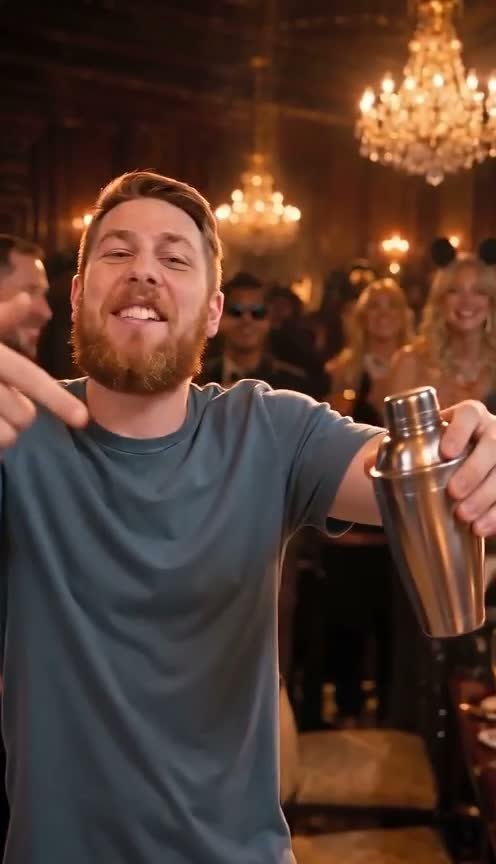
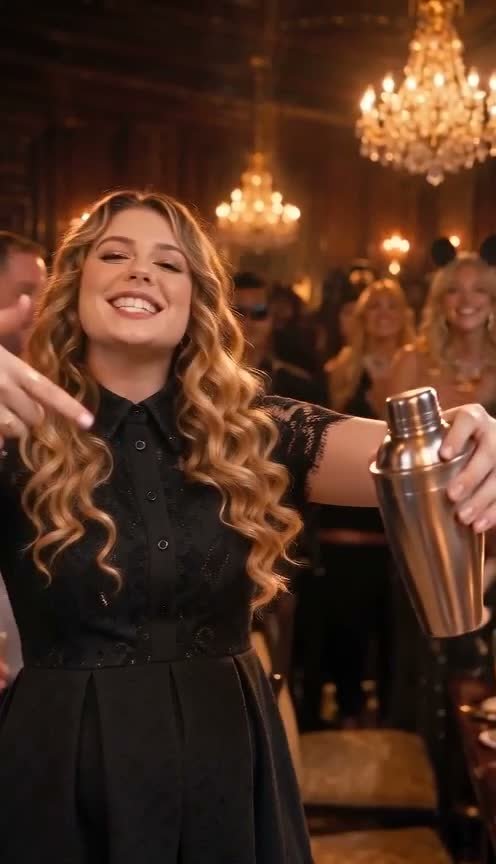
How a music video became an AI trend
The song came out in May. The trend came in late September, and it came from a tool rather than from the artist: a character-swap feature that keeps an existing shot and replaces the person inside it. The first clips were technically impressive and a bit uncanny — the body wasn't quite the face's body — and that mismatch was the joke.
Then the pets arrived. A dog on two legs, holding the shaker, keeping its own markings, is funnier than any celebrity swap, and it needed one photo. Then entire casts: The Office, The Sopranos, Breaking Bad, WWE. By the first week of October, the same fifteen seconds existed with dozens of different faces in it, and the format was doing the work instead of the novelty.
That's the usual shape of an AI trend — someone finds a tool, someone else finds a use for it that the tool's maker never planned, and the format outlives the gimmick. What's unusual here is how little the format asks: one photo, no performance, no editing.
The fifteen seconds, beat by beat
Every version that reads as the trend hits the same beats in the same order. This is roughly what you're watching, and what any AI video of it is trying to reproduce.
The walk-in
One arm out, silver cup or shaker in the other hand, the crowd opening up as the camera backs away. This is the frame everyone recognises before anything else happens.
Shaker up
The cup goes up near the face, the head tilts, the verse starts. In the AI versions the subject keeps its own outfit from the photo — the prop is the scene's, not theirs.
Finger flicks at the lens
Two short jabs toward the camera on the beat. It reads as confidence, which is why it survives every swap: the face changes, the attitude doesn't.
Hand on the collar
Chin up, hand to the chest. It's the beat people screenshot — the pose is doing all the work, so a bad likeness hides here and a good one shows off.
Pouring into the crowd
The shaker tips over raised glasses and the room leans in. Hands are the first thing AI video gets wrong, so this is where a rushed render falls apart.
The 'Where she at?' scan
A flat hand over the eyes, scanning a room for someone who isn't there. It lands twice in the original. Miss it and the clip stops reading as the trend.
The gesture is the trend. The hand-over-eyes scan was already a meme before the party clip — Drake threw it up on the stadium screen after a Ronaldo goal at the World Cup earlier in 2026. The video took the gesture, put a chandelier behind it, and the two have been inseparable since.
Two kinds of Burning Bridges AI video
Both get called the same thing, and they're made in completely different ways. Worth knowing before you follow any guide, because they ask for different things from you.
Swap
A new face on the original footage
The clip itself is the base — same room, same camera, same crowd timing — and a motion-transfer model replaces the performer frame by frame. This is what the first wave did, and it's why those versions look identical to the video. It needs several photos, it costs more, and it sits much closer to the original footage than most people realise.
Tell it apart: the camera move is exactly the music video's, the crowd is the real one, and the outfit changes character from shot to shot.
Rebuild
A party that looks like the scene
No original frames at all. A video model builds a chandelier-lit party in the same style, then puts your subject in the lead with the same beats. It looks like the trend without being a copy of the video, and it works from one photo — which is the whole reason this route exists.
Tell it apart: the room is close but not identical, the guests are generated faces, and the light falls a little differently between clips.
The swap route produces the closest match to the video and carries the most legal risk, because it reuses the footage. The rebuild route is what this site does: no original frames, one photo in, fifteen seconds out. If you want the step-by-step for either, that's in the full guide.
Why it keeps spreading
Three reasons, none of them complicated. It costs one photo, so the barrier is a selfie you already have. The result is instantly legible — nobody needs context to understand why a dog is rapping in a chandelier room. And the format is a slot: swap the face, keep the rest, and the clip is new again. A slot is what a trend needs to survive past week two.
The flip side is that the slot is easy to fill. Dozens of tool sites now offer their own version, the big multi-tool platforms have template pages, and most of them hand out a free first clip to pull people in. If you're choosing between them, the comparison of what actually differs is more useful than a list of logos.
Not the same as Burnin' Bridges AI Music
Search the trend name and you'll run into a YouTube channel called Burnin' Bridges Ai Music: an unrelated AI country project with its own songs and covers. Different thing entirely — no Drake, no party scene, no trend. It just happens to own the same three words, so it takes up room in the results and confuses people who half-remember a name.
If what you saw was a chandelier party with somebody rapping at the camera, you're in the right place. If it was a song about heartbreak with an AI voice, that's not this.
Frequently asked questions
A wave of short AI videos that put someone else — you, a friend, a pet, a TV character — into the chandelier-lit party scene from Drake's 'Burning Bridges' video. The room, the camera movement and the dance stay; the person in the middle changes.
The earliest dated version we can find went up on September 19, 2026, made with a motion-transfer tool. It stayed a niche thing for about a week, then spread through late September and early October as pets, cartoon characters and whole TV casts got swapped in.
'Burning Bridges' from Drake's 2026 album Iceman, released May 15 with a music video whose party scene is the template. The room in that scene is the private dining room at Sotto Sotto in Toronto — dark wood, crystal chandeliers, a packed floor in evening wear.
No, and the two get mixed up constantly in search. Burnin' Bridges AI Music is an unrelated AI country project with its own songs and channel. This trend is about the Drake party scene — different thing entirely, same words in the name.
Some do. The original wave swapped a new face onto the actual clip, frame by frame, which is why those versions look identical to the video. The other route rebuilds a party that resembles the scene from scratch — no original frames, which keeps it clear of the footage itself.
Because the swap route can replace the people behind the lead as well, one photo each. Those clips need five or six photos and cost more to render. The one-photo versions leave the crowd as generated faces, which is why they read slightly differently.
Want one with your face in it?
One photo, a few minutes, fifteen seconds with the party sound already in it.
Unofficial fan tool — not affiliated with, endorsed by or connected to Drake, OVO Sound or Republic Records.